Friday, June 03, 2011

Landed in Singapore. One hour to make the connection.

Wednesday, June 01, 2011

SQ503 to Bangalore.

Tuesday, May 31, 2011

IBM office, then global conference call, and then off to Bangalore.

Friday, May 27, 2011

Pajama day at school.

Thursday, May 26, 2011

Looks like July 25 will be the big day for Zediva.
http://ping.fm/OHikt

Sunday, May 22, 2011

New IBM study out now: Connected Devices are tough to do, but sooo valuable when done right. http://ping.fm/Q9NIt

Friday, May 20, 2011

United 955 from London to San Francisco

Sunday, May 15, 2011

Alas, no upgrade. Economy to London, 100% full.
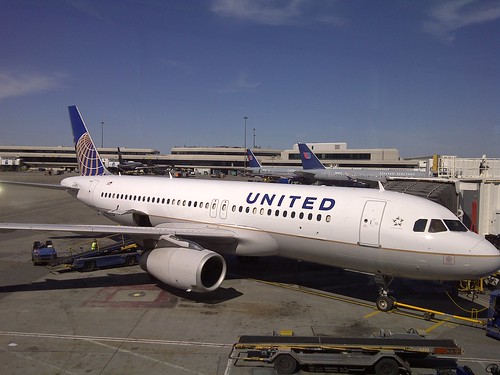
About 25 years of changing logos right next to each other.
United 930 San Francisco to London. Awaiting my upgrade. Agent says not to get my hopes up.

Thursday, May 12, 2011

UA226 to Boston.

Wednesday, May 11, 2011

Just found out I am a founding member of IBM's new Industry Academy, a kind of global think-tap of our top industry experts. Cool.

Sunday, May 08, 2011

So, when the compliance people think you've done something wrong, they cc your boss on the note. And when they realize they screwed up do they cc their own boss? Heck no!

Saturday, May 07, 2011

UA927 Frankfurt to San Francisco.

Thursday, May 05, 2011

SK126 from Malmo to Stockholm.

Was I Wrong About The Blackberry?


Six months ago, it looked for all the world like RIM, the makers of the Blackberry phone and messaging system, were DOA.  Their phones were dull, their operating system tired, and their plans for a tablet were very very late to market.

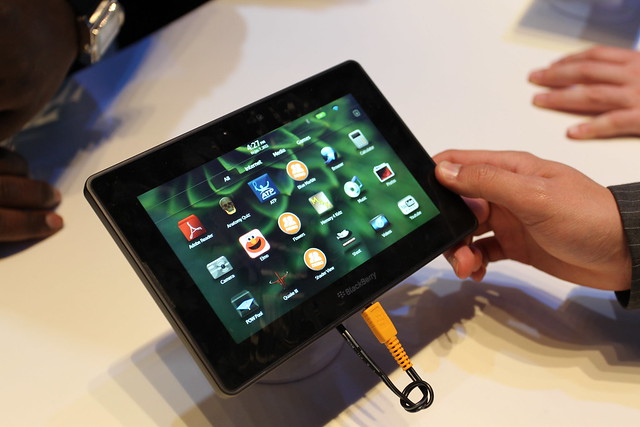
The Blackberry Playbook - Image from ETC@USC


Something happened two weeks ago that changed my mind.  I got a chance to play with RIM's new Playbook tablet.  And it was great.  The Playbook is the single best tablet on the market today from an operating system perspective.  The iPad2 still beats it for hardware and app selection, but the Playbook stands head and shoulders above competing offerings on the Android platform.

In addition to very good hardware, the Playbook runs a new operating system called QNX that RIM purchased last year.  It handles mult-tasking was ease and RIM has also invested heavily in the user interface experience.  The result: a slicker, smoother multi-tasking interface than anything else on the market.

RIM has more than 3,000 applications ready for the Playbook, about 30 times more than Android tablets.  And the QNX O/S is headed for their phones too, probably sometime next year.  Early reports suggest that the Playbook is selling well to the core Blackberry fan-base, better than any Android tablet (though that's a low bar).

The result: though painfully slow in their transformation, RIM shows signs of getting it done soon enough to avoid irrelevance.  Additionally, the success of the Playbook may become critical, in the end, to their survival.  It's increasingly clear that smartphones are not islands.  The are just the smallest item in the ecosystem.  Smartphone ecosystems like Apple and Android have tablets and that's a critical strength.

By contrast, Windows Phone 7 has no tablet planned, which is a shame, unless Windows 8 turns out to be much slimmer and tablet friendly.  HP has WebOS in both phone and tablet form, but HP's tablet is even later to market than RIM and it doesn't have a loyal Blackberry user base on which to build.

Though I'm a diehard iPad user myself, with over 100 applications on my iPad2, I must admit to looking at the Playbook with some interest.  A 10" version and some good note-taking software will seal the deal for me.


Wednesday, May 04, 2011

Warner Bros. Acquires Social Movie Site Flixster
http://ping.fm/JUZQU

(Sent from Flipboard)
Microsoft shows how to embrace hackers with Kinect. http://ping.fm/JoqTU

Tuesday, May 03, 2011

United 938 to London/Heathrow.

Wednesday, April 27, 2011

Friends: who wants to be a CIO? Ping me. A medical device company reached out to me looking.

Tuesday, April 26, 2011

My good friend Saul Berman has a great new white paper out on the transition from products to services. http://ping.fm/Rr80Z

Sunday, April 24, 2011

Cutting red tape is a fast path to rebuilding Japan. http://ping.fm/bwABX
Important evidence of another wave of industry productivity growth - this time from analytics. http://ping.fm/SiRBO
Despite Amazon cloud issues, there's no going back to a pre-cloud era. http://ping.fm/vzWj2

Thursday, April 21, 2011

United 852. Narita to San Francisco.
That's dedication: IBM electronics consultants helping client recovery on site at factories in Fukushima to get Japan exports back on track.

Tuesday, April 19, 2011

Samsung's split personality - components & branded OEM - faces key challenges. http://ping.fm/dRKhh
IBM gross margins six points over Apple, for those of you keeping score. http://ping.fm/5gU6j

Apple, Samsung Clash Could Force More Innovation At Samsung

Apple and Samsung are now engaged in a high stakes legal battle over Apple's charge that Samsung copied it's design approach in phones and tablets. Imitation, as they say, is the sincerest form of flattery.

But this has to fall into the category of "Be Careful What You Wish For".  Samsung has traditionally been a fast follower in business - moving into spaces with standardized products at lower prices once the market has been proven - push down cost and driving up quality and volume.  This has worked well for the company and, if anything, the success of this strategy has probably slowed down investments in more innovative, original approaches.

That could all change now.  Apple is telling Samsung, in a way, that it must choose between the fast-follower business in consumer devices and the roughly $6 billion in annual component sales to Apple.  If Samsung chooses to back off on the fast follower business model, that might not mean a smaller Samsung.  It might mean a much more innovative one willing to take bigger risks.

Apple might like that Samsung even less.

Samsung at CES.  Photo from Joanna

Monday, April 18, 2011

Wow! Philips ditches the TV business. New CEO wastes no time in kicking off a major transformation. http://ping.fm/T5aGN

Sunday, April 17, 2011

Forget Tepco, Japanese Start-ups Power On

There's a good article over at TechCrunch on their Japan start-up day.  Link.  There's a number of good ideas there.

Japan's start-ups face big challenges in getting going and the number of start-ups featured in the TechCrunch event was tiny compared to the same number that would show up in Silicon Valley.  Too many graduates in Japan still aspire to join the ranks of big companies.

Even more important, few Japanese companies see start-ups as a source of innovation they can acquire.  Today, while IPOs remain an important "exit" point for companies, the most common one is acquisition by a larger technology company.  The buyer gets a proven product and team at the stroke of a pen and the start-up gets a faster exit and great payday.

Tokyo Tower, in brighter days.  Photo from Around The Rings

Friday, April 15, 2011

Small reminders everywhere of the power of the Japan quake. Of course, what else do you expect when you shake 40 story building?

Thursday, April 14, 2011

TEPCO killed the Narita Express. :(
Narita. Tired, but one conference call before I can sleep.

Wednesday, April 13, 2011

Just got good-night kisses from kids via Skype. Uber-cute.
Hey google -really - you can't send international SMS messages from Voice? This is so stupid.
Overnight in Frankfurt. (Unscheduled). I think I need a beer.
Everything that can go wrong has gone wrong. And then stuff that I didn't think could go wrong, did.
Morning in Amsterdam, a beautiful day starting.

Tuesday, April 12, 2011

Nothing Special In The Air: Lufthansa's A380

Airlines have often used big new airplanes as opportunities to roll out updated products.  Despite the hype, however, the A380 looks to be different.  Unveiled in an era when first class is all but extinct, the super jumbo seems to have little to recommend it other than it's new.

Today will be my second flight on the A380 and I can already tell this is the last time I'll bother to remember that.  While some planes seem to be universally wonderful (The 767, 747), the A380 seems to be quite boring. 

Most boring of all?  Lufthansa's implementation of the A380.  The airline has done really nothing new in coach or business class to make the plane differentiated or special.  In coach, the squeeze remains as tight as ever.  And in Business Class, Lufthansa is determined not to break down and give people an actual flat bed.

The result: its just a big plane.  One that will bring a big line at the beginning and the end of the flight, but nothing special in the middle.  All things being equal, a flight on a United 767 would probably be much better.

Photo from Globetrotter

The new terminal at SFO puts everyone else to shame. If only other airports were like this. http://ping.fm/9ubzl
Chuckle chuckle. I wonder how many dogs my laptop would weigh? http://ping.fm/OdnIZ
I have re-surfaced. Spent weekend asleep, now back to work.

Wednesday, April 06, 2011

SK558 from AMS to ARN

Round The World: Death By Conference Call

The hardest thing about doing conference calls on the road is that impact of jet-lag on your ability to stay awake.  Presenting is easy.  Listening, concentrating, is hard.

In fact, right now, I'm supposed to be listening to someone tell me about a new software product.  But my mind is wandering.  It's not that I don't approve on wondering - it's useful and probably healthy from time-to-time, but with jetlag and exhaustion, that wondering starts to extend just a bit too far.


Netflix wins Mad Men exclusive. 2011 really could be the year the old order collapses. http://ping.fm/qf3yH

Tuesday, April 05, 2011

Yes, I'm tired and sleep deprived and a little bit wound up, but hard to  miss such an uplifting view.
Yes, I'm tired and sleep deprived and a little bit wound up, but hard to
miss such an uplifting view.
KL 1260 Nice to Amsterdam.
IBM's electronics team taps into the future of connected health. http://ping.fm/2m850
IBM lab in Nice. A mid-century modern classic.
This is a rather unexpected illustration of what we mean when we say "lean innovation" http://ping.fm/nTxAD
MPAA sues Zediva, more coverage. http://ping.fm/OIwvA
The super-premium online window movement gains momentum. http://ping.fm/4JGNA

Monday, April 04, 2011

Finally GPS gets some real competition - but can Russia keep it's network operating reliably? http://ping.fm/J3iPq
You mean there are still people who aren't on Facebook? http://ping.fm/OYvz3
National security trumps convenience it London, it seems. http://ping.fm/Fdxmt
The gloves are off and it's to the courts they go: MPAA sues Zediva. http://ping.fm/vPigF

Around The World in 21 Days. Day 1.

Sunday.  The first day of my round-the-world trip to meet clients and team members.  Day 1: United 930 to London departing at 7pm and then connecting onto Lufthansa for Munich and then, finally, Nice.


At SFO


I've been sitting in the lounge for 3 hours now, having come to the airport early to get work done in a sane, quiet atmosphere.  With two kids at home, yes, really, going to the airport can be peaceful.  After writing a ton of email, I decide I better get up and walk around a bit before sitting on my rear for 10 hours.

Just as I'm leaving, I get a phone call from United.  They say I'm scheduled to fly to Frankfurt tonight, but I have not checked in.  Am I planning on coming?  No, I say.  I'm going to London.  Now I'm worried, is my reservation messed up? Did I forget something really important - like what flight I am on?  No, they say, just some confusion in the record.  They will clean it up.

I put it out of my mind and go for a walk.  My goal, cover the international terminal front to back before getting on the plane. I put on some music and walk out.  40 minutes and three terminals later, I'm back wondering towards my gate.

I go down and inquire about the all-important upgrade - they have just started boarding.  Somehow, I'm auto-pilot because I don't even notice that I'm not at the right gate.  London in 97, but I'm here, inexplicably, at gate 92, which is the flight to Frankfurt.

Fortunately, they've been looking for me.  The flight to London is overbooked and they wanted to offer me an upgrade on the flight to Frankfurt, complete with earlier connection and arrival in Nice 2 hours sooner, so I'm on.  The gate agent prints me new boarding passes and asks me if I'd like a revised copy of my itinerary.  Sure, I say, so she prints it out.  She takes one look at it and hands it to me. "You're insane," she says.

Nice views over the Alps


On the plane: Half a glass of champagne, some warm nuts, and I'm down to sleep for 7 hours.


Awesome views above the alps between FRA and NCE

Sunday, April 03, 2011

Being flexible and no checked luggage: switched to UA926 to FRA, arrive in Nice 2 hours faster.
Confused about your brand identity?

Saturday, April 02, 2011

Out for dinner on a beautiful evening in San Francisco.

Friday, April 01, 2011

Airline Alliances, Mergers Generate Bizarre Results

Check this out.  I buy a plane ticket on United Airlines.  One segment is operated by United.  The next segment is operated by Continental, but sold as a United Airlines code-share with a United flight number.  And the third segment is operated by Lufthansa, but again, sold as a United segment with a United flight number.

  • My first flight is upgradeable.
Upgradeable.
  • My second flight is not.  Say what?  Doesn't United own Continental?  They do indeed.  Doesn't matter.  I cannot upgrade my ticket to business class with any number of miles, points, or VIP certificates.

Not upgradeable.
  • The third flight is operated by Lufthansa.
Not upgradable.


But aren't both Lufthansa and Continental also members of the Star Alliance? Yes they are.  Can't you book upgrade awards through the Star Alliance?  Yes you can.  So why can't I upgrade? Because I bought the United ticket.

Had I purchased a ticket from Continental, I could have used United miles to upgrade on the exact same flight.  But, having purchased it with a United code share flight number, I cannot upgrade.

Seriously, you cannot make this stuff up.


Hmmm. I think the on-time notice is not very credible without a plane.
Typical lunch in Munich and back to work!

Thursday, March 31, 2011

Supply chain shocks hit electronics. Japan's Mittelstand makes the world go round. http://ping.fm/viEFT

Music Lockers Are DoA, But Maybe That's Besides The Point

It's hard to see how music lockers like Amazon's have much of a future, at least at the moment.  As wireless carriers try hard to cut back bandwidth consumption, streaming music seems like one of the first places that consumers will forgo.  After all, most smartphones today can carry your whole music collection easily for most consumers.  And for those who do want streaming music, services like Pandora are much less hassle and basically free.

So what's the point?  It may just be to push the envelope in the industry, opening up the way for a much broader licensing model and forcing the RIAA into a more rational approach.

Your vault, in the cloud (but lighter).  Photo by Ostograd.

Wednesday, March 30, 2011

Sayonara Sand Hill road. Hello Kickstarter. I just put $40 into Joulies. http://kck.st/hLU2zo
Two years old from the Economist, but prescient on today's Japan-based SCM crisis. http://ping.fm/g5SB0

Back To The Blackberry And Not Unhappy About It

In the last 9 months, I've done the full tour of mobile phone operating systems and carriers.  And now, with a new job that requires a Blackberry, I'm back just about exactly where I started.  My full tour of smartphones has included:

  • An iPhone4 on AT&T, which was amazing in a number of different ways.  Slim, beautiful, and solidly crafted, the iPhone 4 was easily the nicest phone I've ever owned from a physical design standpoint.  Layer on top of that the single best operating system and app environment on the market and you get something truly great.
  • A Motorola Droid 2 Global.  Ugh.  Awful.  Android works well, but lacks the polish of the iOS.  Motorola's Droid 2 Global was large, plasticky, and the battery lasted even less than the iPhone - much less than the iPhone.
  • A Motorola Defy.  Nice.  Rugged Android with good battery life.  Sluggish, however, due to a weak CPU.
  • A Nexus S.  Fast with a great display, but still unable to shake the plastic feel.  Nothing quite gets you back to the iPhone experience.  And crippled by T-Mobile's network.
And, finally, a return to the Blackberry.  This time a Torch 9800 on AT&T.  The Torch is no bigger than most of the other phones, but has a keyboard that makes it easy to pound out messages on.  Returning to the Blackberry has reminded me of it's charms, namely:

  • Fast typing.  Email is the heart of my business.  That means typing out messages.
  • Fast everything.  The Blackberry OS is one of the snappier and more responsive operating systems.
  • Best-In-Class PIM functionality.  The core PIM functions on a Blackberry, which represent 90% of the smart in smartphone for business users remain the best in the business.
RIM's recent financials show that the company is losing the marketshare battle to Apple and Google.  And while I'm required to use the Blackberry now, I know my employer is moving towards a more open choice.  Will I go back to the iPhone?  Well see how the iPhone 5 looks if and when we're allowed to choose.

Back to the keyboard.  Photo by sk8geek


Tuesday, March 29, 2011

The Emerging Commerce Cloud

"Cloud" has become a generic designation for all services that take place somewhere online, but most of the initial cloud services have been quite basic: storage and CPU power, for example.  As time goes by, however, cloud services are become more and more specialized and driven by business requirements rather than technology capability.

One new broad set of cloud services that is emerging are commerce services.  Everything needed to build, manage, maintain and optimize and online sales presence is now available without having to buy application software.  And while basic services have long been available to small businesses (think of eBay as the first commerce cloud service) these are now becoming industrial strength and enable substantial customization.

In addition to the core capabilities around selling, the commerce cloud that's emerging now includes a huge range of specialized services including business analytics and optimization.  a good example of this is Upstream Commerce, which helps companies optimize the pricing of their products.  Historically, pricing management and optimization was a very specialized skill, now it's available as a web service.

Instant Visibility to Pricing Competition - Form the Upstream Website

It's not year clear what the pricing is for solutions like this, but it's the ability to assemble an integrated online sales environment, complete with analytics is shifting from a million dollar+ investment down to a monthly service fee.

Saturday, March 26, 2011

Now how to wake him up for his play date. He's going to be grumpy.

Wednesday, March 23, 2011

I love those crazy people at BoingBoing. Sometimes it's just better to laugh at BigContent than reason with it. http://ping.fm/khNDc

How To Offend Your Customers: Threaten Them

In the US, your credit rating is very important to consumers.  People with good credit can borrow to homes and cars, those without cannot do so except at exorbitant rates, if at all.  Increasingly, companies have been quick to deny credit and cut off service, even to customers with fairly good track records.

And now there's a new game in town: threatening customers before they've even missed a payment.  I know because it's happened to me twice in the last week.  First, I got a threatening letter from my mortgage company.  They told me I was delinquent on my mortgage payment and threatened me with dire consequences if I failed to pay immediately.

Panic ensued.  How could I be late on a mortgage that was just re-financed?  I had provided automatic payment information when I completed the re-finance.  Indeed, after a few phone calls, it turned out that I was not delinquent at all.  The mortgage company's systems, seeing no record of past payments, decided to send me an automated threatening letter, oblivious to the fact that new mortgages have no payment record.

Isolated incident?  I would have thought so except that three days later, Verizon interrupted a phone call to inform me that unless I paid immediately, I  would be cut off as my bill was delinquent.  How was that possible when they had my credit card and I had authorized automatic payment?  Apparently it takes 30 days for them to realize that they have my credit card.

In both cases, attempts by the bank and Verizon to collect on non-delinquent accounts used the kind of language that I'd normally expect for someone who's months overdue and has lied twice about "the check being in the mail."  Threatening people like this is a great way to alienate customers and damage your brand.

Shoot First and Ask Questions Later.  It's the new way to do business.  Photo by Rob Sameehan.

Starving Netflix of content will not kill them - just accelerate their rise as an original producer. http://ping.fm/63UhO
I know what I should NOT do to lead a complex global team. That does not, however, eliminate enough options to tell what I SHOULD do.
More analysis on Zediva - and quite good stuff too. http://ping.fm/BvCWf

Bag-O-Flage

The art of concealing your carry on luggage using blankets and pillows to avoid having it stowed in the overhead bin when seated at the exit row.

You're not supposed to have any bags here...but...  Photo by GlobalX

Tuesday, March 22, 2011

Are We Getting Any Smarter About Risk?

There's lots of data out there that shows that human beings are bad at assessing risks - particularly ones that are infrequent but potentially devastating.  Economists and insurance companies can take a stab at it, but even they cannot fully understand the likelihood of catastrophe for extremely rare events.

That said, we do know that some things are risky.  Like earthquakes.   Yet despite the large number of earth quakes that happen every year and the clear pronouncements about the risk, few people actually buy earthquake insurance.

Will the ubiquitous digital camera on a cell-phone change this?  Thanks to cell phones and digital cameras, we're over-run with imagery from the earthquake and tsunami in Japan.  For the first time in my life, I got to see what "Liquefaction" really is (check this out).   Another video shows an entire harbor being washed away by the Tsunami.

End result?  Perhaps people will get smarter about buying insurance for disasters.  But you should never underestimate the stupidity of the human race.

Monday, March 21, 2011

Will AT&T's T-Mobile Buy-Out Get Approval?

There's little doubt among wireless customers that this is a merger that will be bad for business.  Already, competition between the two major US wireless operators seems to be squeezing out secondary players like Sprint and T-Mobile.

Tith T-Mobile out of the way, the US will have just one GSM operator, AT&T, and one major CDMA operator committed to LTE, and two minor CDMA operators, one of  which is committed to LTE and one of  which is not really sure what it's doing (Sprint).

The result for consumers: a nightmare of non-inter-operable handsets and long contracts with high prices and bad service.  Over the last few years,  the phone-y marketing battle between AT&T and Verizon has reached a fever pitch, but actual investment in new cell sites and bigger backhaul has been relatively slow.  And both companies have worked hard at throttling back "unlimited" data plans.

The result: prices are flat in the US while they're falling everywhere else.  GigaOm has a great article on how market concentration is damaging our competitiveness, and hopefully  the DoJ will work to block the merger.  Link.

If the DoJ doesn't block the merger, it could extract a set of concessions that might be be enough to increase competition in the market.  The GigaOm article talks about deals with rural carriers, but the biggest thing that the DoJ could do would be to strengthen Sprint and improve the prospects for MetroPCS as a truly national discounter.

Market concentration is leading to reduced CapEx and more marketing.  Photo by Smith.


Thursday, March 17, 2011

Business Models for Web Properties & Cable TV Channels Are Converging

HBO started as a premium movie channel but eventually, it moved into the business of making original content.  And while today HBO's schedule still has a lot of movies on it, many people buy subscriptions for access the network's critically acclaimed original series.

HBO's model has been coped by more and more cable channels, including AMC, which had it's breakout original series Mad Men.  Now Netflix is doing the same thing.  Unable to buy fresh content at reasonable prices, Netflix has reached a size and scale that allows it to start making original productions.

Netflix will not be the last web player to do this either.  Others such as Hulu or LoveFilm and Amazon may need to start building their own primetime schedules.  Traditional broadcast and cable networks are trying hard to keep the "contagion" of Internet TV from spreading.  Withholding top series and fresh content are a key part of that strategy.

But Hollywood is not monolithic.  Buyers with money can always get good content made.  That said, Hollywood is full of smart money and there's a long history of people making small fortunes out of big ones in Hollywood.  Don't be surprised if Netflix gets burned a few times before it gets the model right.

Online productions get bigger and competitive.  Photo from Wikimedia.

Wednesday, March 16, 2011

Little Demand for Verizon iPads

In the multi-billion dollar marketing war between AT&T and Verizon, one fact that many people are not aware of is that Verizon's 3G data network is not so great.  And while every iPad sold out on launch day, some Q&A with Apple employees in the line and at the store told me that demand for Verizon's iPad was "reluctant" and "they'll take it if that's their only 3G choice."

In general, WiFi-only 16 and 32GB iPads remain the core of the business, but for people who are buying 3G, most are opting for the AT&T choice, with HSPA and global roaming.

Satellite Broadband Could Reshape The Global Infrastructure Game

Satellite broadband has long been considered somewhat useless.  Both my mother and my mother-in-law have or had it at their places and it was painfully slow to use. Like dial-up slow.  (Technically, it's broadband, but only just.  How quickly we forget how slow dial-up really was.)

That's set to change with a new generation of satellites that will deliver up to 400 gigabits of bandwidth from each satellite.  That's enough for over 40,000 simultaneous 10MB downlink connections.   This should support up to 500,000 or more broadband users.  And this is from a relatively small satellite.  Bigger satellites and networks of multiple satellites are under construction.

In the past, these services have been slow and expensive, limiting them to emergency usage and remote access for users with critical business needs and deep pockets.  The next generation will offer competitively priced access in a huge range of global markets, and much of it without the need for a big antenna that requires professional installation.

There's no way that satellite broadband will replace ground-based broadband for urban users.   For a significant share of the market, however, that may not be necessary.  Rural users and less intensive suburban users may find the price and availability competitive.  And that could force ground-based operators to competitive upgrade their service in order to maintain a better level of differentiation.


Tuesday, March 15, 2011

Amazing, thoughtful analysis of the impact of new technologies like 3D printing on the law and regulation. http://ping.fm/Znise

Did Apple Rush the iPad 2 Launch?

It's hard to escape the idea that Apple rushed the iPad 2 launch.  After waiting in line for 3 hours on Friday,  there were barely any iPads left by the time I got to the front of the line.  I wanted an White AT&T iPad, but ended up with a black one instead.

By all accounts, the lines for the iPad 2 were not any heavier than for the original or the iPhone 4, yet Apple seemed to have far fewer devices on hand than at those launches, with many people in the line being turned away and told that there won't be any left for them by the time they get to the front of the line.

Apple's web site is now quoting 3-4 weeks on delivery time for the iPad 2 - and that's after just 3 days of sales.  Signs suggest that either Apple underestimated demand for the iPad 2 (unlikely) or that they launched with far less inventory than they would have liked to - and if so - why?

There's a whole Kremlinology built up on reading the tea leaves from Apple, so I'll avoid any conspiracy theories and just leave it at this: it seems like this was not the smoothest of launch events for Apple.

Launch lines were long and full of disappointed people.  Photo by Brandon Flasch

Monday, March 14, 2011

That Bitter Taste In My Mouth Is Mint.com

Over the last few months I've gotten a taste of what happens when you get something for free and the company that manages that free service doesn't do a good job: no recourse.  I've entrusted my financial data to Mint.com for two years now, but for the last several months, it's become difficult, if not impossible, to get proper updates on transactions, particularly the ones from American Express.

Mint.com's forums are filled with hundreds of complaints on this topic, but there's been no fix.  And as people enjoying a free service, we have no recourse for complaint.  And while Quicken has recently purchased Mint and there may be hope for the future (common back end for integration to banks) in the meantime, free might just be too cheap for mission-critical.

That's not always true.  Google, Microsoft, and Yahoo all operate e-mail services that every bit as reliable as any corporate or paid system I have ever used, but they operate in a fiercely competitive market and have backing from very advanced technology.  The same cannot be said, it seems, for online financial planning.

The online variety leaves a bad aftertaste.  Photo by Steven DePolo

Friday, March 11, 2011

In line for my iPad. Software companies and kickstarter projects are schmoozing the crowd.

Thursday, March 10, 2011

The Top 10 Lies Flight Attendants Tell You


1. Welcome Aboard

2. It’s a federal requirement that you….[insert here]
It may or may not be.  Chances are your flight attendant is making up the rules as he or she goes, some of the them amazingly absurd.

3. There are still some phones turned on.  We can’t leave the gate until all phones are switched off.
You can fool some of the people some of the time, but give up on that when flying to/from silicon valley.  We know better.
4. Flight attendants are here primarily for your safety.
Translation: we're embarrassed that our job is "serving" people and we're not proud of what we do.
5. Use of cellular phones on board may interfere with the navigation systems on the airplane.
See #3 above.  
6. I’ll be right back with that…
I've been waiting for one can of soda since 1987.
7. We're all out of the [insert entrée here]
Actually, we're holding that one back for our own lunch.
8. We just need a few minutes of your undivided attention.
You've seen this video 500 times.
9. If there’s anything we can do to make your trip more comfortable, please don’t hesitate to call on us.
Use the attendant call button at your own risk.
10. Thank you for your business.  It’s been our pleasure serving you today.
We've hidden in the galley as long as we could and we asked the captain to keep the seat belt sign on most of the time so you can't bother us.  Thank goodness this flight with you people is over.


And we cooked this at home just for you.  Picture by 737700

Apple's app store rules are indeed starting to accelerate HTML5 "apps". Readability is the first. http://ping.fm/ve4xz

Wednesday, March 09, 2011

The High-Low Effect Comes to Big Content

Joe Kennedy famously said that he knew it was time to get out of the stock market when he started getting stock tips from the shoeshine boy.  Eighty years later, I know that "cable cutting" (ditching your costly cable subscription for over the top video) is real because I just got suggestions on how to do it this week from a blue-collar, middle-aged New Jersey Transit bus driver.

My bus driver (Route 167, if you care) explained to me how he has his Netflix connected to this Toshiba plasma TV through his playstation.  And so cable cutting is as real as it gets and Comcast should be worried.  More importantly, Hollywood should be worried about the High-Low effect.

For many years now, Hollywood has worked hard to define a set of complex release windows where content gets progressively cheaper as time goes by.  If you step back from it, it's no so unlike the world of retail.  New products arrive first at top end boutiques and then through mid-range department stores and finally at Wal-Mart.

Over the last thirty years, high end boutiques and Wal-Mart have thrived.  Department stores have been slaughtered as consumers choose to go high or low depending on what they value and their mood.  And so we face the concept with entertainment.

People are still going to the movies in the theatre, indeed, theatre revenue has been remarkably robust given the rising prices.  And they are adding Netflix online services in droves.  What they are starting to abandon is the middle ground: pricey cable subscriptions that given them "inbetween" access to content.

The problem for Hollywood is that they are still largely depending on the "department store" of cable to provide the bulk of content revenue and have worked hard to slow the growth of discount online services like Netflix.  It's not working, but they are training a generation of users to not care anymore about release dates and just watch what Netflix recommends.   Great for Netflix, bad for movie studios.

Theatres are like boutiques for content - expensive and (they hope) worth-it.

Tuesday, March 08, 2011

NYTimes InfoGraphic Shows Best Seller List Determined By A Small Number of Readers

This nifty New York Times info-graphic (link for the full one) shows two important things:


  1. The switch from paper to eBooks has happened with terrifying speed.  The best-seller list is dominated by eBooks.
  2. Since Amazon has something like 95% of the eBook market in the US, and they've sold only a few million of the devices, it implies that something like 2-3% of the US population is what really drives the best-seller list.


New York Times Best-Seller List - in Paper & eBook Share.  (Big Chart Link)

Monday, March 07, 2011

Heard today (To me): "I talked to Gary about you...surprisingly, he had nice things to say." Hmmph.

iPad 2 A Bit Disappointing, But Apple's Share of Tablet Business Unlikely To Erode Quickly

There's an automatic assumption out there in the market that Apple's share of the tablet PC market will erode in about the same manner that it's share of the iPhone has eroded.  That may not turn out to be true because phones and tablets are sold in different ways.

Expensive smart-phones are sold mostly with contracts.  That means you can't really tell the difference between the cost of an iPhone and the cost of an Android phone.  Carriers tend to sell most of these phones at fairly similar (highly subsidized) prices, and Apple charges a premium to carriers for its iPhone.

Tablets are a different ball-game.  They are sold mostly without subsidies and in this market, we are able to see that competitors are having a hard time beating Apple's cost structure.  Motorola's XOOM tablet is basically competitive (a 10% premium for the free 4G upgrade is quite reasonable) but only at the higher end.  Nobody has cracked the $499 price point yet and that's where Apple continues to sell the majority of the iPads - WiFi only products.

Though the number of tablet apps in this space is limited on Android, that will improve.  However, to really dent Apple's market share in this space, companies are going to have to start beating Apple on price with competitively spec'd products.  That doesn't appear to be happening this year, though perhaps we'll see some aggressive moves in 2012.

And still the same price.

Saturday, March 05, 2011

The Day The Movies Died - a great article from GQ. http://ping.fm/hBZAC

Friday, March 04, 2011

How To Roam Cheaply With Your Smartphone

Verizon charges $25 per megabyte for overseas data roaming.  On an average day, my smartphone consumes about 50 megabytes of data when I am here in the US.  That makes going overseas and using your phone a financially ruinous proposition.  Even more scary than using a hotel mini-bar.  Even with a big data package, you can drop your roaming costs to $1/megabyte, which makes roaming a bargain at $30-50/day.

What To Do Before You Take Off.  (Picture by Skinny Lawyer)


There is way to get going for much much less money.  But it requires preparation and planning.  After many years of global travel, here's my recipe for how to survive your trip overseas without coming home with a huge roaming bill.

Step 1: Buy A Package


  • Every carrier offers roaming packages for international travel.  They are all incredibly expensive and offer very poor value for money, except when compared to traveling without a package.
  • With the most aggressive management of your e-mail and apps, you could get your roaming usage down to 1 MB/day, but don't count on it.  


Step 2: Delete Your Apps


  • Modern smartphones make it a breeze (mostly) to re-install apps you've purchased, so back up your data and delete as many apps as you can.  Decide what you absolutely must have and delete everything else.
  • For me, the essentials are e-mail, address book, maps, and calendar. 
  • The reason to delete everything is that many apps can consume huge amounts of data without your knowledge.  Apps can even update themselves, resulting in megabytes of downloads for apps that don't generally use any data at all.  Better safe than sorry.


Step 3: Change Your Mail & Messaging Settings


  • Mail is a good example: just checking for it uses data.  Instead of having "push" email or regular checks, have mail update only manually
  • If you can switch off HTML mail or stop the automatic loading of pictures in mail, even better.  An e-mail that's text only can use just 1-3 kilobytes ($0.01 in roaming fees) or it can use 3-5 megabytes if it has pictures in it ($75 to $125 in roaming fees).  
  • On the Blackberry you can go entirely to text e-mail and on the iPhone and others you can just avoid downloading pictures through the mail settings.


Step 4: Change All Your Other Settings


  • Once you've pared down your apps to the minimum, go through the settings on all your remaining apps.  You've got two objectives: limit when they download data and how much they download.
  • Most apps have blocks that let you limit them from downloading except over WiFi or other settings that can help you cut your data consumption or prevent downloads when you're not checking.

Step 5: Test It Out


  • Switch off your WiFi and get most of your data over the cellular network for a few days before you travel overseas.  (Why switch off your WiFi?  If you are using WiFi at home and the office and getting most of your data that way, you may not get a realistic test of how much data you use when away from home)
  • Test out your roaming strategy before you go for a few days.  Your carrier has data (usually on an 18-24 hour lag) on how much data you use.  Log in to their account management web site and see.  If your data consumption is still in 10-20mb/day range, you probably missed some apps and settings to limit your data consumption.

And then hit the road.  Do these tips work? Let me know.


Thursday, March 03, 2011

Can Verizon Justify A $350 ETF on a $200 Subsidy?

Since 2010 Verizon has raised it's ETF from $200 to $350 for smartphones and devices.  That works in the murky world of cell-phone pricing, but can it last the tablet game?

For cell-phones, list prices are relatively irrelevant.  Most people buying $500+ cell phones are doing so on a 2 year contract, complete with "subsidy" of $350 or so.  Verizon can claim (kinda) that you're just paying them later what you should have paid them sooner.

Not so with tablets.  The subsidy in the tablet space is a fairly transparent $200 - so can they really justify a $350 ETF?  I think not.  Prepare yourself, Verizon, for some lawsuits as the first ETFs are charged to tablet customers.

Fine Print Shows  $350 ETF for a $200 subsidy

Wednesday, March 02, 2011

More Evidence of Apple's Desktop Share Reaching A Tipping Point

TechCrunch is running a great story looking at the source of their readership over the last four years.  As a leading tech blog, they're a good "leading indicator" of how the market is moving.  TechCrunch users are probably ahead of the overall curve when it comes to technology adoption, but perhaps not out of the mainstream.

The biggest gains are coming form Apple's least sexy business: the Mac.  The TechCrunch article (link) shows that few people are using the iPhone or iPod to browse web-sites.  And of course, that's no surprise given the small form factor, it's not much good for intensive reading.  The other interesting note is that in just one year, the iPad captured as much as share as it has taken Linux to achieve.

I made the data into a chart so you can see the visual impact, but the full article is over on TechCrunch and it's worth reading.

Market share by browser O/S for TechCrunch readers.

Tuesday, March 01, 2011

One Small Step for Google, One Giant Leap for Bing

Search is critical to commerce, but the rise of content farms and all the other kinds of search engine optimization technologies has made it hard for people to differentiate between junk and valuable sites.  Despite all the algorithms that power search engines, people are still much smarter than machines at telling the difference between a content-farmed page or a scam and a real product page.

Both Bing and Google are busy integrating social recommendations - "likes" - into their search results.  As time goes on, you'll see search results annotated with information about who likes what in your social network.  But the difference between the two is enormous, and for once, Bing has something that Google can't match: integrated data from Facebook.  

When it comes to "likes" online, there's Facebook and then there's everything else.  Google has tried and repeatedly failed to break into the social networking business.  Without 500 million users "liking" stuff on a daily basis, Bing's ability to present socially relevant search results is an order (or orders) of magnitude better than Google.

And because people are so much better than algorithms at picking good sites from bad, this advantage could start to eclipse all of Google's other advantages and put Bing in the leadership position.

Upper right on Bing: log in using Facebook and get search results that are influenced by your social network.